


How to revolutionise HR: process to product
Posted on 22 February 2026
By Agne Quinn
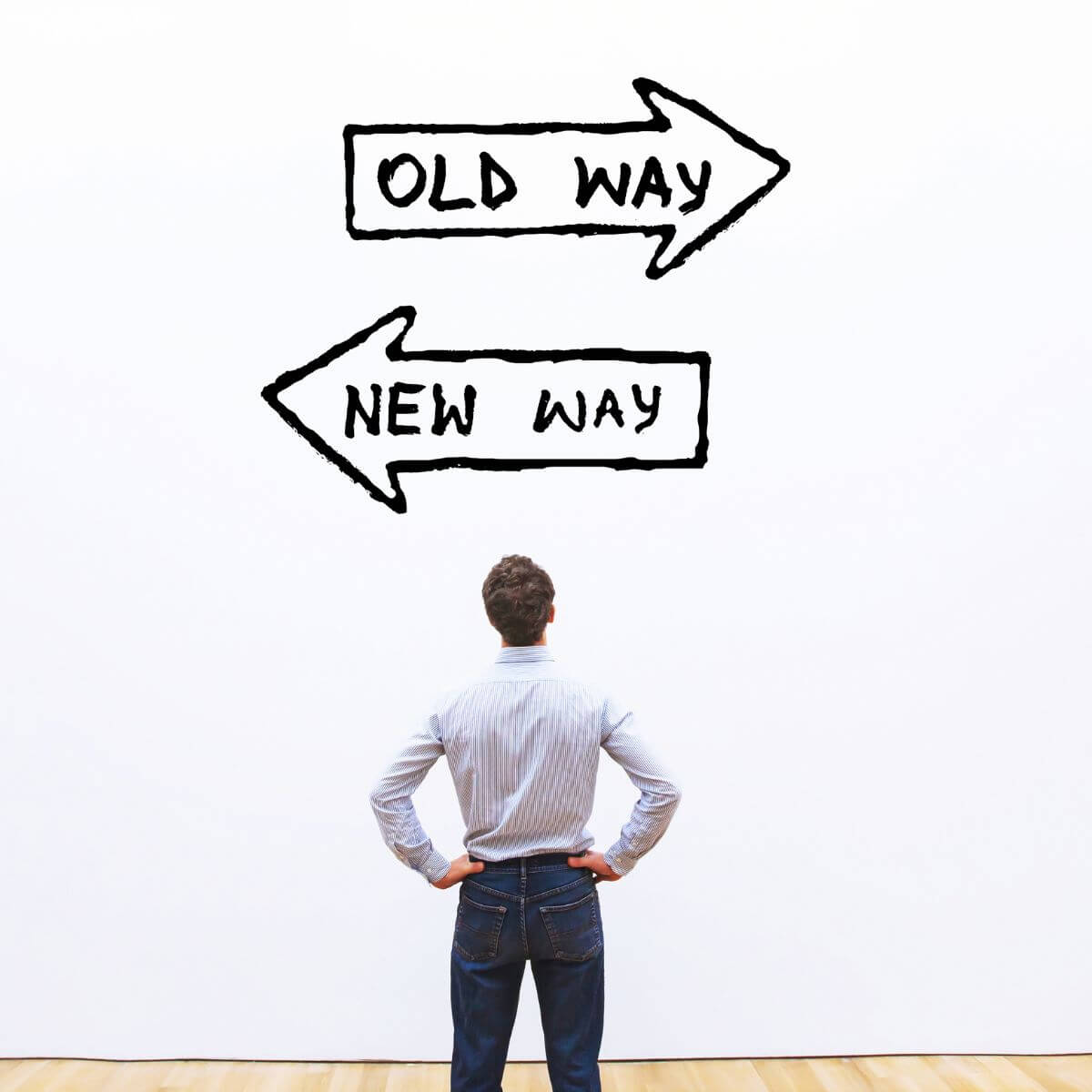
What’s the difference and why should HR bother?
Most HR transformations don’t stall because of technology. They stall because we quietly default back to process thinking.
Across many organisations the same pattern plays out. The system goes live, the modules are configured, governance is tight, the cycle dates are clear. For example:
- Performance reviews happen on time.
- Succession grids are completed.
- Recruitment workflows are compliant.
- Learning completion rates are reported.
On paper, everything is working. However, in leadership meetings the same frustrations continue to be evident:
- “We don’t really know our future skills gap.”
- “Hiring still feels reactive.”
- “We can’t see leadership risk early enough.”
- “We don’t know if performance is truly aligned to strategy.”
This is the quiet gap between process and product.
What process thinking looks and feels like
Process thinking is comforting. It is structured. It has a calendar. It has checkpoints. It asks, quite reasonably:
Did we complete the cycle?
There is a sense of control in that question. HR teams feel organised. Auditors are satisfied. Managers know what’s expected of them. However, over time something subtle happens.
- Performance management becomes “that time of year.”
- Succession becomes a workshop.
- Learning becomes a compliance tracker.
- Recruiting becomes a workflow engine.
The modules start to feel like obligations rather than enablers. Managers comply. Employees participate. HR administers. The system becomes something people move through — not something that moves the organisation forward.
And that’s the fundamental difference, let’s cover that again:
The system becomes something people move through — not something that moves the organisation forward.
Process thinking only gets an organisation so far. It’s not wrong. In fact, in regulated or complex environments, it is essential. It creates consistency and governance. It reduces risk.
However, it rarely creates momentum. In today’s world of expectation and technological proficiency – it’s not enough on its own.
What product thinking changes
Product thinking starts with a different question entirely:
What capability is this designed to strengthen?
Now the conversation shifts.
Performance is no longer about forms and ratings. It is about whether the organisation is measurably sharper, clearer and more aligned than it was last quarter.
- Succession is no longer a static grid >>> it becomes a living view of leadership risk exposure and readiness depth.
- Recruiting stops being a response to vacancies >>> becoming a way of shaping future capability supply.
- Learning becomes less about course attendance >>> more about whether skill gaps are shrinking.
- Career development stops being an aspiration form >>> becoming a mechanism for internal mobility and retention.
When you operate this way, the modules start to feel different inside the organisation. Managers don’t dread the cycle — they use it. Employees don’t fill in profiles — they see pathways. Executives don’t ask HR for reports — they rely on HR for capability insight.
The processes and technology haven’t changed. The intent has.
Why this matters now more than ever
In sectors facing demographic shifts, digital disruption, efficiency drivers, infrastructure renewal or AI-led redesign, capability gaps are no longer theoretical risks. They are operational realities, for example:
- An ageing engineering workforce.
- A shortage of digital skills.
- Leadership pipelines that are thinner than assumed.
If your talent modules are only running cycles, they cannot respond fast enough to those shifts.
The million dollar question: how to begin the shift
It doesn’t start with reconfiguration. It starts with reframing. Before you open a module, pause and ask:
What would “success” look like if this was working brilliantly?
- For performance, perhaps it is visible strategic alignment and fewer surprise underperformance cases.
- For succession, perhaps it is knowing — at any moment — how exposed you are if a critical leader leaves.
- For learning, it might be watching a measurable digital capability curve rise across the organisation.
Once you can describe the outcome in human and commercial terms, the system begins to serve a purpose beyond administration.
Another shift is ownership.
- Process leads manage timelines.
- Product owners manage value.
A product owner worries about adoption quality, user experience, data integrity and whether the intended capability is strengthening over time. They look at trends, not just deadlines. They ask uncomfortable questions about impact. They own the end-to-end add up of the processes put together.
Without that ownership, even the best-configured system and process drifts back into compliance mode.
The measurement shift
This is often where many organisations hesitate. Completion rates are reassuring as they are easy to report and probably something that is already in place.
However product thinking pushes further. For example, metrics about the following become more important and insightful:
- Are internal mobility rates increasing?
- Is bench strength deepening?
- Are we reducing time-to-productivity for critical hires?
- Are we closing skill gaps that matter commercially?
These questions are less comfortable. Although, they are the ones that connect HR to enterprise value.
The human shift
Perhaps the most important shift, though, is human. Product thinking is empathetic, as it asks how something feels to use.
- Does a manager experience clarity or burden?
- Does an employee experience growth or bureaucracy?
- Does a recruiter feel strategic or transactional?
If your talent modules feel heavy, they will never be strategic — no matter how elegant the configuration. When they feel intuitive and purposeful, behaviour changes. Therefore, when behaviour changes capability follows.
From modules to a Talent Portfolio
To bring this to life, the most mature organisations stop viewing Performance, Succession, Recruiting and Learning as separate systems. Alternatively, they see them as a portfolio of interconnected products.
- Performance data informs succession readiness.
- Succession gaps drive targeted learning.
- Learning builds skills that reduce external hiring demand.
- Career pathways fuel internal mobility.
It becomes an ecosystem — not a checklist. That is when HR moves from service provider to capability architect.
The real question?
So here is the test.
If your technology environment stopped running tomorrow, would leaders feel administrative disruption — or strategic blindness?
- If it’s the former, you’re running processes.
- If it’s the latter, you’re running products.
It is this question that truly identifies the difference between operating HR systems that focus on process or have shifted to product.
The HR Fixers’ difference
The future of HR isn’t about running better cycles. It’s about building stronger organisations and HR should be leading this from the front. It’s time to evolve how HR operates in order to strategically support the organisation, and we know how to do this in practice and in reality.